
- Agate Gemstones
- Amethyst Gemstones
- Apatite Gemstones
- Aquamarine Gemstones
- Citrine Gemstones
- Diamond Gemstones
- Emerald Gemstones
- Garnet Gemstones
- Gemstone Pairs
- Kunzite Gemstones
- Moon Stone
- Opal Gemstones
- Peridot Gemstones
- Quartz Gemstones
- Ruby Gemstones
- Sapphire Gemstones
- Sphene Gemstones
- Spinel Gemstones
- Tanzanite Gemstones
- Topaz Gemstones
- Tourmaline Gemstones
- Turquoise Gemstones
- Zircon Gemstones
How to Identify Natural Gemstones: The Complete Buyer’s Guide (2026)

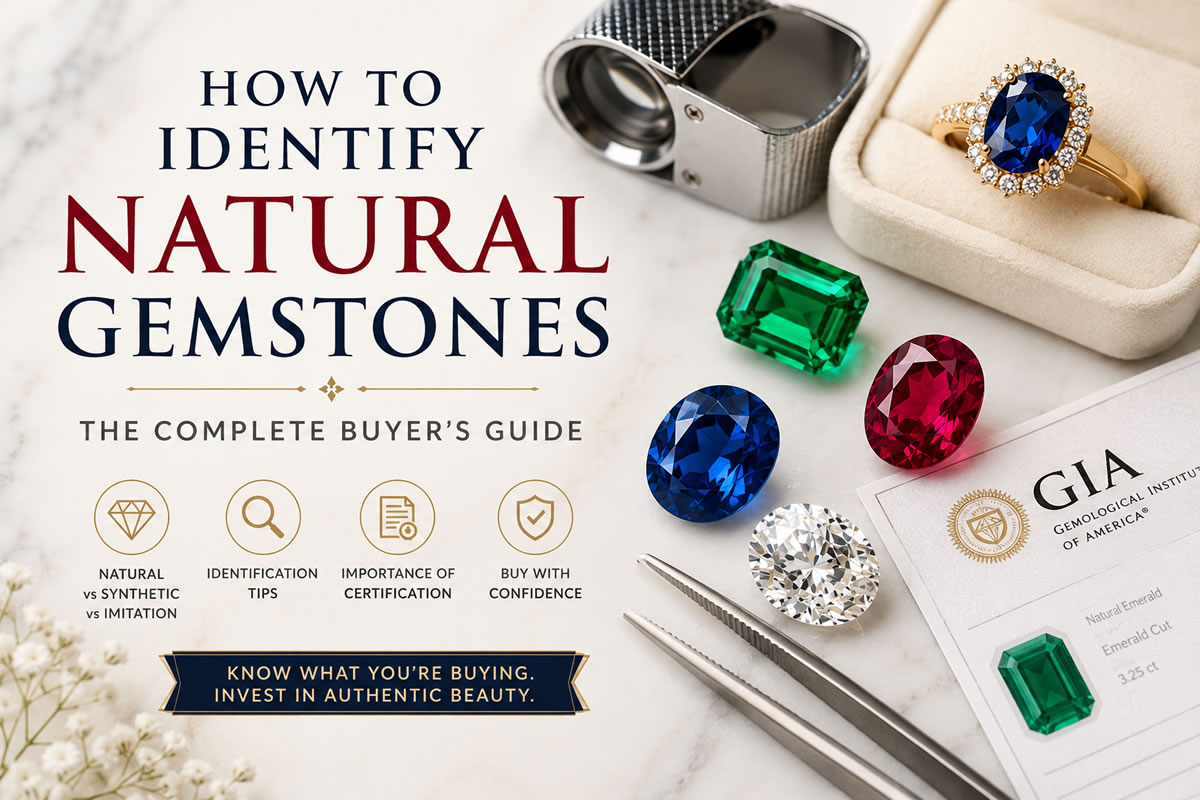
Learn how to distinguish natural gemstones from synthetic and imitation stones, understand gemstone treatments, and buy certified gems with confidence.
Buying a gemstone is an exciting experience, whether you’re purchasing a loose stone for a custom jewelry piece, investing in a rare collector’s gem, or selecting a meaningful gift. However, with the growing availability of synthetic, treated, and imitation gemstones, it has become more important than ever to understand exactly what you’re buying.
Many gemstones look nearly identical to the untrained eye, making it difficult to determine whether a stone is natural or laboratory-created. Fortunately, with the right knowledge and by purchasing from reputable sellers, you can confidently choose authentic gemstones that retain their beauty and value for years to come.
In this comprehensive guide, we’ll explain everything you need to know about identifying natural gemstones and making informed purchasing decisions.
What Is a Natural Gemstone?
A natural gemstone is a mineral, organic material, or rock that forms naturally within the Earth over millions of years through geological processes. These stones are mined, cut, polished, and prepared for use in jewelry without being artificially created in a laboratory.
Some of the most popular natural gemstones include:
- Emerald
- Ruby
- Sapphire
- Diamond
- Aquamarine
- Tourmaline
- Spinel
- Garnet
- Peridot
- Tanzanite
- Topaz
- Amethyst
- Citrine
Every natural gemstone is unique. Tiny inclusions, slight color variations, and natural growth patterns are considered proof of authenticity rather than imperfections.
Natural vs. Synthetic vs. Imitation Gemstones
Understanding these three categories is the first step toward becoming an informed gemstone buyer.
Natural Gemstones
Natural gemstones originate in nature and are extracted from mines. They may undergo common treatments such as heating or oiling, but their origin remains natural.
Characteristics
- Formed naturally underground
- Rare and valuable
- Every stone is unique
- May contain natural inclusions
- Often accompanied by laboratory certification
Synthetic Gemstones
Synthetic gemstones are grown in laboratories using processes that replicate natural gemstone formation. They possess the same chemical composition and physical properties as natural stones but are man-made.
Examples include:
- Lab-grown sapphire
- Lab-grown ruby
- Lab-grown emerald
- Lab-grown diamond
Characteristics
- Chemically identical to natural stones
- Usually more affordable
- Often have fewer inclusions
- Created within weeks instead of millions of years
Synthetic gemstones are genuine gemstones—they’re simply not naturally formed.
Imitation Gemstones
Imitation gemstones only resemble natural gems in appearance but have completely different chemical and physical properties.
Common imitation materials include:
- Glass
- Cubic Zirconia
- Colored crystal
- Plastic
- Synthetic spinel used as imitation
These stones are primarily used in fashion jewelry.
Why Natural Inclusions Matter
One of the biggest misconceptions among buyers is believing that a flawless gemstone is always better.
In reality, natural inclusions often help identify genuine gemstones.
Examples include:
- Tiny crystal inclusions
- Needle-like rutile silk
- Fingerprint patterns
- Feather inclusions
- Mineral deposits
- Growth tubes
Gemologists use these inclusions to determine whether a gemstone formed naturally.
Completely flawless stones, especially at low prices, should raise suspicion.
Understanding Common Gemstone Treatments
Many natural gemstones receive treatments to improve their appearance. These treatments are generally accepted within the gemstone industry as long as they are fully disclosed.
Heat Treatment
Heat treatment enhances color and clarity.
Commonly treated gemstones:
- Sapphire
- Ruby
- Tanzanite
- Aquamarine
- Citrine
Heat treatment is permanent and widely accepted.
Oil Treatment
Emeralds naturally contain fractures. Cedarwood oil is commonly used to reduce their visibility.
This treatment:
- Improves appearance
- Is common in the industry
- Should always be disclosed
Fracture Filling
Glass or resin may fill surface-reaching fractures.
Common in:
- Ruby
- Emerald
Filled gemstones generally have lower market value than untreated stones.
Diffusion Treatment
This treatment introduces color into the gemstone’s surface.
Although attractive, diffusion-treated stones are worth less than untreated natural gems.
Dyeing
Lower-quality gemstones may be dyed to enhance color.
Common examples include:
- Agate
- Jade
- Turquoise
Always ask whether a gemstone has been dyed.
How to Identify a Natural Gemstone
While laboratory testing is the most reliable method, there are several signs that may indicate whether a gemstone is natural.
Examine the Inclusions
Natural stones usually contain:
- Tiny crystals
- Internal fractures
- Growth patterns
- Mineral inclusions
Synthetic stones often display curved growth lines or gas bubbles.
Check Color Distribution
Natural gemstones rarely have perfectly uniform color.
Instead, they often display:
- Slight zoning
- Color variations
- Natural gradients
Extremely even color may indicate laboratory creation or treatment.
Observe the Brilliance
Different gemstones exhibit unique brilliance.
For example:
- Diamonds have exceptional fire.
- Emeralds produce a softer glow.
- Sapphires display rich, velvety brilliance.
Glass imitations usually appear dull by comparison.
Weight Matters
Every gemstone has a different specific gravity.
For example:
A cubic zirconia of the same size as a diamond weighs considerably more.
Professional gemologists use this property during identification.
Hardness Test (Professionals Only)
Each gemstone ranks differently on the Mohs Hardness Scale.
Examples:
- Diamond – 10
- Sapphire – 9
- Ruby – 9
- Emerald – 7.5–8
- Topaz – 8
Never attempt scratch tests at home, as they can permanently damage your gemstone.
Use Magnification
A jeweler’s loupe (10× magnification) reveals:
- Natural inclusions
- Growth patterns
- Surface treatments
- Chips
- Fractures
Many collectors use a loupe before making significant purchases.
Why Gemstone Certification Is Important
Certification is one of the most reliable ways to verify a gemstone’s authenticity.
A reputable gemological laboratory examines the stone and issues a report describing its characteristics.
A certification report typically includes:
- Natural or synthetic origin
- Species and variety
- Weight
- Measurements
- Color
- Clarity
- Cut
- Transparency
- Treatments (if any)
- Country of origin (when determinable)
Certified gemstones provide greater confidence and often command higher resale value.
Trusted Gemological Laboratories
When purchasing valuable gemstones, look for reports from recognized laboratories.
Some of the most respected include:
- GIA (Gemological Institute of America)
- IGI (International Gemological Institute)
- AIGS (Asian Institute of Gemological Sciences)
- GRS (GemResearch Swisslab)
- Lotus Gemology
- Gübelin Gem Lab
- SSEF Swiss Gemmological Institute
These organizations are recognized worldwide for their expertise and unbiased gemstone analysis.
Questions Every Buyer Should Ask
Before purchasing any gemstone, ask the seller:
- Is the gemstone natural?
- Has it received any treatments?
- Is it certified?
- Which laboratory issued the certificate?
- Is the certificate original?
- What is the gemstone’s origin?
- What is your return policy?
A trustworthy seller will answer these questions transparently.
Red Flags to Watch Out For
Avoid purchasing if you notice:
- Prices that seem too good to be true
- No certification for expensive gemstones
- Sellers refusing to disclose treatments
- Vague product descriptions
- Poor-quality photographs
- Unrealistic claims such as “perfect natural gemstone” at bargain prices
- No return policy
If something feels suspicious, it’s usually best to look elsewhere.
Tips for Buying Gemstones Online
Online gemstone shopping has become increasingly popular, but it requires careful research.
Follow these best practices:
- Buy from reputable gemstone dealers.
- Choose certified stones whenever possible.
- Read customer reviews.
- Request high-resolution images and videos.
- Verify laboratory reports.
- Compare prices across multiple sellers.
- Understand shipping and return policies.
- Ensure secure payment methods are available.
Taking these steps can help you avoid costly mistakes.
Caring for Your Natural Gemstones
Proper care preserves your gemstone’s beauty and longevity.
General care tips:
- Store gemstones separately to prevent scratches.
- Clean with warm water, mild soap, and a soft brush unless the stone requires special care.
- Avoid harsh chemicals and ultrasonic cleaners for delicate gems like emeralds or opals.
- Remove jewelry before sports, gardening, or heavy work.
- Have valuable jewelry professionally inspected and cleaned periodically.
Different gemstones have different care requirements, so always follow recommendations specific to your stone.
Final Thoughts
Natural gemstones are among Earth’s most remarkable treasures, each shaped over millions of years and possessing a beauty that cannot be replicated by nature alone. Understanding the differences between natural, synthetic, and imitation stones, recognizing common treatments, and insisting on reputable certification are the keys to making a confident purchase.
Whether you’re buying a vivid Zambian emerald, a rich blue sapphire, a fiery ruby, or a sparkling diamond, knowledge is your best investment. Always purchase from trusted sellers who provide full transparency, detailed product information, and recognized laboratory certification. By taking these precautions, you’ll not only enjoy the beauty of your gemstone but also its lasting value for generations to come.